
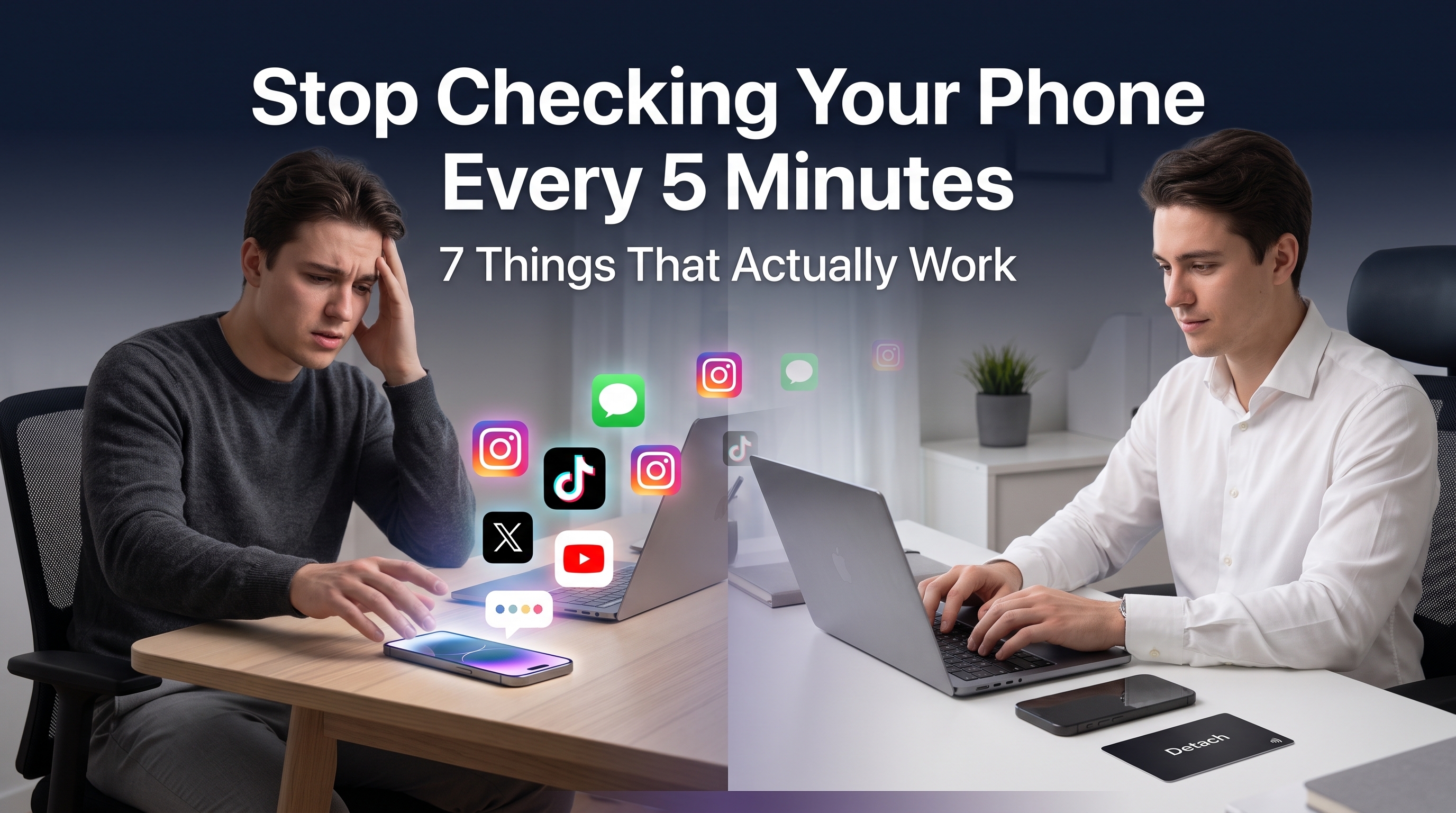

The numbers are in. The average American spends more time on their phone than on sleep, exercise, and real social connection combined. This is what that actually costs you.
Most people have a vague sense they spend too much time on their phone. They just do not know how much. When the number is right in front of them, something shifts.
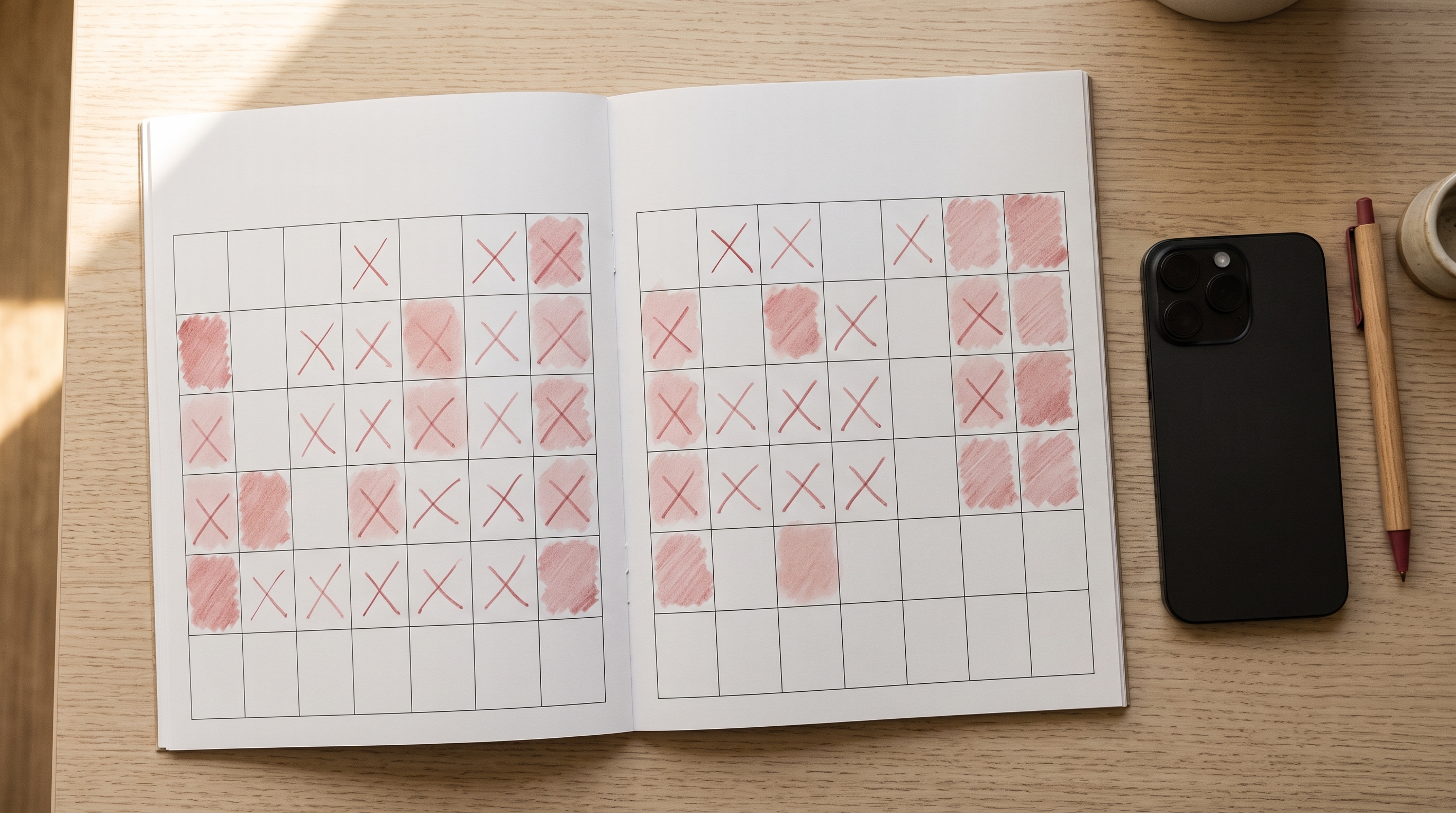
According to Reviews.org's 2026 Cell Phone Usage Report, the average American spends 5 hours and 1 minute on their phone every single day. Run that math across a full year and it becomes 83 days, more than two and a half months spent staring at a screen you are holding in your hand.
That is not screen time on a TV or laptop. That is your phone, in your pocket, pulling your attention away from everything else in your life 186 times per day.
This Is Not a Time Management Problem
The instinct when we see numbers like these is to reach for a productivity fix. Wake up earlier. Use a planner. Set better goals. But excessive phone use is not a time management failure. It is the outcome of a design system working exactly as intended.
Every major social media platform employs teams of engineers whose specific job is to maximize the number of minutes you spend inside their app. The red notification badge, the infinite scroll, the autoplay video, none of these are accidents. They are deliberate behavioral triggers refined through years of testing on hundreds of millions of users.
"You are not failing to manage your time. You are losing it to systems that are specifically engineered to take it from you."
This is why telling yourself you will "just use it less" rarely works. You are not competing against a bad habit. You are competing against billion-dollar behavioral design. The playing field is not level and willpower alone was never going to be enough.
The Real Price of 83 Days
Lost time is only one part of the cost. Research published in 2026 across multiple peer-reviewed sources shows that excessive phone use creates compounding damage across four areas of life that most people do not connect back to their screen time at all.
Productivity
A single phone notification costs 23 minutes of focused recovery time. The average knowledge worker loses an estimated $15,000 worth of productive output per year to digital distraction.
Sleep
Pre-bed screen use suppresses melatonin production and disrupts circadian rhythms. Research links high bedtime phone use to a 30% reduction in sleep quality — affecting mood, memory and immune function.
Mental Health
Heavy phone users show a 2.8 times higher depression risk compared to low users. Social media's variable-reward loop — the same mechanism as slot machines — drives anxiety, FOMO and compulsive checking behavior.
Relationships
31% of couples report increased conflict directly caused by phone use. Research confirms that time spent engaging with algorithmic feeds consistently displaces quality time with people physically present.
"The compounding effect: Poor sleep reduces focus. Reduced focus increases stress. Higher stress drives more compulsive phone use. More phone use before bed worsens sleep further. The cycle feeds itself quietly for months before most people notice the damage."
Why Most Attempts to Cut Back Fail
The most common approach to reducing phone use is Apple's built-in Screen Time or Android's Digital Wellbeing. Both tools share the same critical flaw: a one-tap override button that is always available. Research consistently shows that people override these limits most often during high-stress moments, exactly the moments when they are most vulnerable to compulsive use.
A randomized controlled trial published in a peer-reviewed journal found that participants who reduced screen time to under two hours per day for three weeks showed measurable improvements in stress levels, wellbeing scores and sleep quality. The keyword is reduced not monitored, not nudged, but genuinely restricted through a mechanism strong enough to hold.
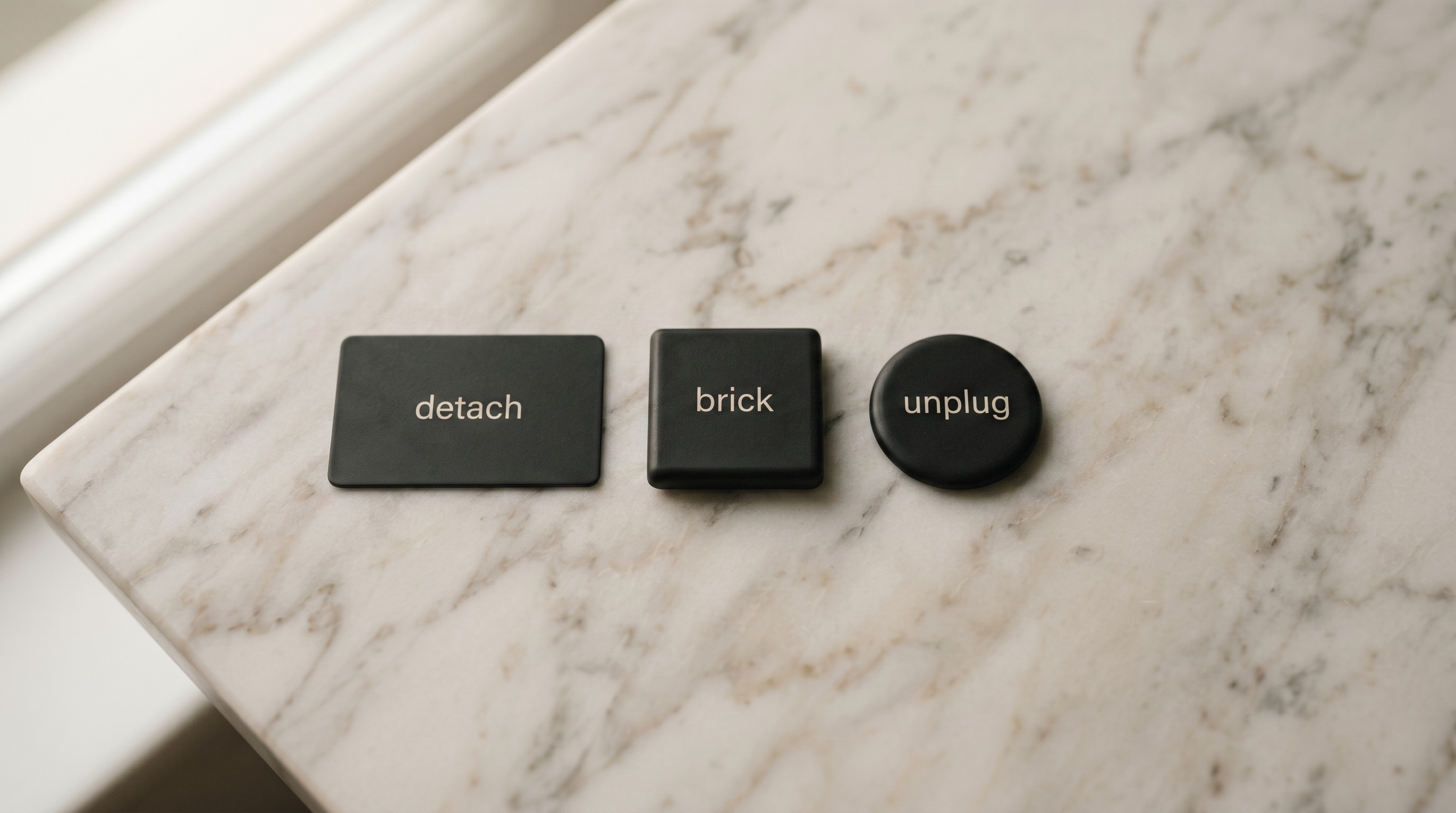
That mechanism is environmental design. When the option to open a distracting app is genuinely removed rather than gently discouraged, behavior changes. This is the principle behind physical app blockers like Detach — tools that use real friction rather than soft reminders to protect your time.
What Happens When You Take the Time Back
Cutting even one hour of daily phone use returns 15 full days to your year. Here is what that time actually represents in real terms.
15 Days Recovered Per Year From 1 Hour Less Per Day
- Read 18 books cover to cover at a comfortable pace
- Complete a full online course or professional certification
- Add 180 hours of exercise — roughly 3.5 hours per week
- Spend an additional 900 minutes in genuine face-to-face conversation
- Write the first draft of something you have been putting off for years
These are not abstract aspirations. They are the direct mathematical result of reclaiming time that is currently being spent on apps you did not consciously choose to open.
The One Change That Makes Everything Else Possible
Reducing phone use does not require a digital detox retreat or deleting all your social media permanently. It requires one structural change: making compulsive app opening genuinely difficult instead of frictionless.
Detach is a free app blocker that blocks distracting apps and websites on a schedule you set in advance. Its Commitment Mode removes the override option entirely for a set period, so the decision is made once rather than re-litigated forty times a day. The NFC card option adds a physical unlock requirement that breaks the automatic habit before it completes.
You do not need to block everything. Start with the two apps that steal the most time. Block them during your first hour of work and your last hour before bed. That single change, consistently maintained for two weeks, is enough to begin measurably recovering your time, your focus and your sleep.
Start Taking Your Time Back Today
Detach is free. No account required. Block the apps that are costing you 83 days a year and see what changes in the first week.
Get Detach Free → getdetach.appFrequently Asked Questions
How much time will the average person spend on their phone per day in 2026?
According to Reviews.org's 2026 Cell Phone Usage Report, the average American spends 5 hours and 1 minute on their phone per day, totaling 83 days per year. The global average is slightly lower at 4 hours and 37 minutes daily. Gen Z users average significantly higher, with some studies recording over 9 hours of total screen time per day across all devices.
Is spending too much time on your phone actually bad for your health?
Yes, and the evidence is well established in 2026. Multiple peer-reviewed studies link excessive phone use to a 30% reduction in sleep quality, a 2.8 times higher risk of depression in heavy users and measurable declines in the ability to sustain focused attention. The physical effects include digital eye strain, affecting over 80% of heavy users and tech neck syndrome, affecting 72% of people who spend significant time looking down at a device.
Why can I not stop checking my phone even when I want to?
This is not a willpower problem. Social media platforms and most popular apps use variable-ratio reinforcement, the same behavioral mechanism that makes slot machines compelling. Each refresh delivers an unpredictable reward, which trains your brain to keep checking. Over time, this creates genuine dopamine dependency that makes resisting the urge genuinely difficult without environmental changes that remove access entirely rather than simply discouraging use.
Does reducing screen time actually improve mental health?
Yes. A randomized controlled trial published in 2025 found that reducing screen time to under two hours per day for three weeks produced statistically significant improvements in stress levels, wellbeing scores, depressive symptoms and sleep quality compared to a control group. Even one week off social media in a University of Bath study produced measurable improvements in anxiety and depression scores. The evidence is consistent across multiple independent studies.
What is the fastest way to reduce phone screen time?
The single most effective method is removing the ability to access high-distraction apps during specific time windows rather than relying on reminders or willpower. Research on behavior change consistently shows that environmental friction works better than intention. Use a blocker with a commitment mechanism — one that cannot be overridden in a single tap — during your two highest-priority focus windows each day. Start with one hour in the morning and one hour before bed and measure the difference in your daily output and sleep quality after two weeks.
How many days a year does the average person waste on their phone?
At 5 hours and 1 minute of daily use, the average American spends 83 days per year on their phone. If you subtract the time genuinely used for work, navigation, calls and necessary communication, the discretionary portion — scrolling, social media, entertainment — accounts for the majority of that total for most users. Even reducing purely discretionary use by one hour per day returns 15 full days to your year.