What Happens to Your Body When You Stop Using Your Phone Before Bed, Based on Real Research

Eric Factor
A peer-reviewed clinical trial found that just 30 minutes without your phone before bed improved sleep, mood and working memory within four weeks. Here is exactly what changes and when.
Most people know that using their phone before bed is not ideal. Far fewer know what specifically happens to their brain and body when they actually stop. The research on this is precise, peer-reviewed and more dramatic than most people expect.
This is not general wellness advice. This is a breakdown of what the clinical evidence says happens week by week when you remove your phone from your pre-sleep routine. The results are consistent across multiple independent studies and the timeline is faster than almost anyone assumes.
90% of adults use a device within one hour of bedtime
59% Higher insomnia risk per extra hour of evening screen time
24min Average sleep lost per night per extra hour of evening screen use
What Your Phone Is Actually Doing to Your Body at Night
The damage from pre-sleep phone use happens through two distinct mechanisms that most articles collapse into one. Understanding both explains why the benefits of stopping come so quickly.
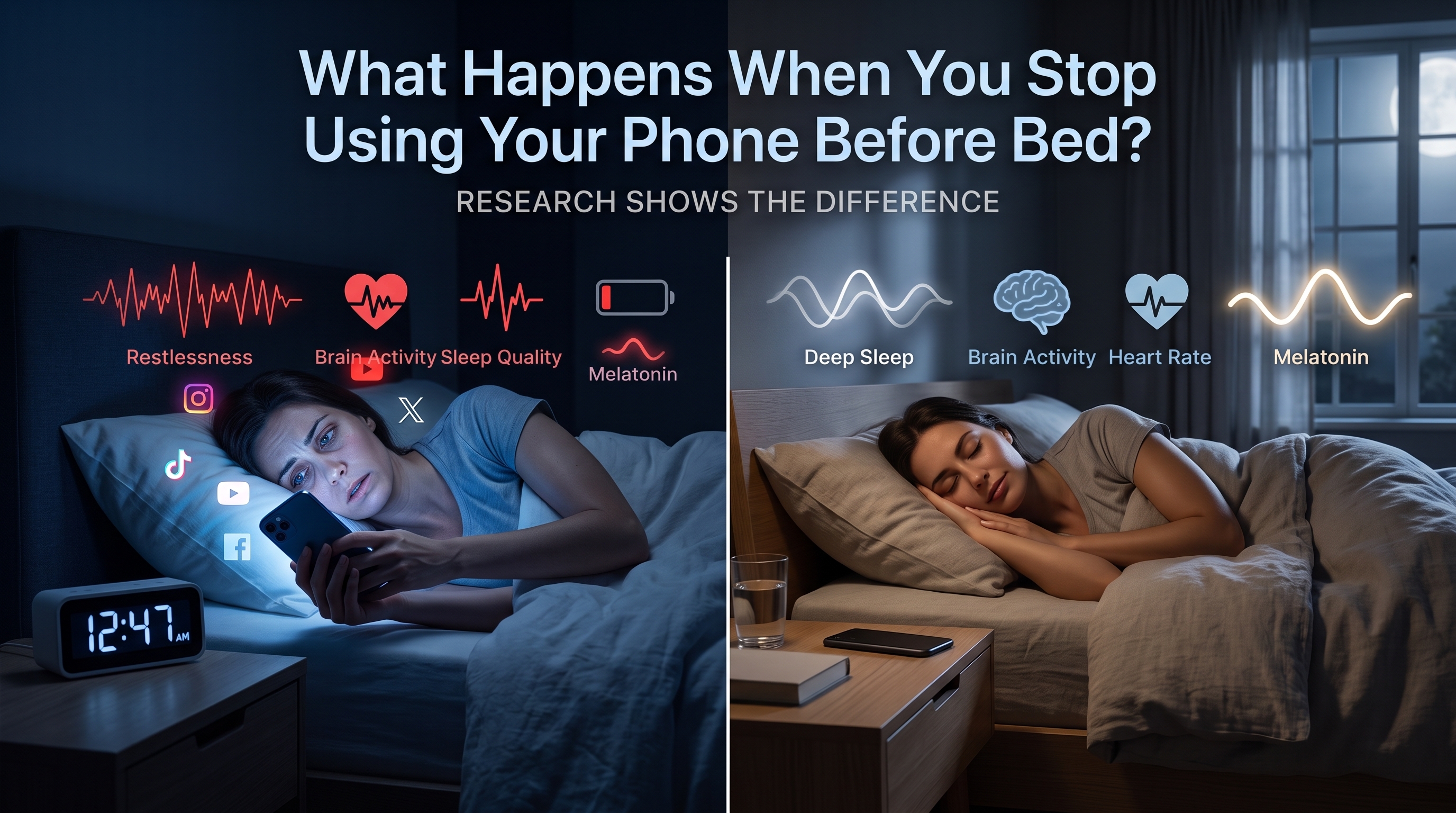
The biological mechanism: Phone screens emit blue light that closely mimics natural daylight. When your eyes detect this light after sunset, your brain interprets it as a signal to stay awake. It suppresses melatonin — the hormone that triggers the transition into sleep — and keeps your nervous system in an alert state. Studies show that two or more hours of evening screen time can seriously disrupt the melatonin surge your body needs to fall asleep naturally.
The cognitive mechanism: Beyond light, the content you consume before bed keeps your mind cognitively active when it needs to wind down. Research published in the journal Sleep Health found that individuals exposed to emotionally stimulating content before bed experienced heightened physiological arousal that delayed sleep onset and reduced sleep depth. Social media, news and messaging apps are specifically engineered to produce this kind of arousal. Your brain stays engaged long after you put the phone down — processing, reacting and generating mental activity that competes directly with sleep.
Peer-Reviewed Research: PubMed / PLOS ONE
A randomized controlled trial published in PLOS ONE studied 38 participants split into two groups. One group avoided phone use for 30 minutes before bed for four weeks. The control group received no instructions. The results were unambiguous: the intervention group experienced reduced sleep latency, increased sleep duration, improved sleep quality, reduced pre-sleep arousal, and measurably improved working memory and positive mood. The control group showed no significant change.
What Happens to Your Body Week by Week
The clinical evidence shows the benefits do not arrive all at once. They accumulate in a predictable sequence. Here is what the research confirms across the first four weeks.
Week One: You Fall Asleep Faster
The most immediate change is in sleep latency, the time between lying down and actually falling asleep. Without the blue light signal and cognitive stimulation from your phone, melatonin is released earlier and your brain enters the wind-down state it needs. Most people notice they are falling asleep noticeably faster within the first five to seven days.
Week Two: You Sleep Longer and Wake Up Better
By the second week, sleep duration begins to increase. A study assessing the impact of restricting phone use one hour before bedtime found it advanced lights-out time and increased total sleep time. Participants also reported feeling more refreshed upon waking — a direct result of spending more time in the deeper restorative stages of sleep that phone-disrupted nights consistently cut short.
3
Week Three — Your Mood Measurably Improves
The third week is where the effects move beyond sleep into daily emotional functioning. The PLOS ONE trial recorded a statistically significant reduction in negative affect and an increase in positive affect in the intervention group by week three. This is not a subjective impression. It was measured using the validated Positive and Negative Affect Schedule. The connection is direct: better sleep quality produces better emotional regulation the following day.
4
Week Four — Your Memory and Focus Sharpen
The most surprising finding in the clinical research is the improvement in working memory. By week four the intervention group showed measurable improvements in n-back task performance — a validated cognitive test measuring the brain's ability to hold and process information in real time. Better sleep consolidates memory. Sharper working memory improves every task you perform the following day from focused reading to complex decision-making.
The participants who stopped using their phones 30 minutes before bed did not just sleep better. They thought more clearly, felt more positive and performed better on cognitive tests — all within four weeks.
The Four Benefits — Summarised
💤
Faster Sleep Onset
Melatonin is no longer suppressed by blue light. Your brain enters its wind-down state earlier and sleep comes faster — typically within the first week.
🌙
Longer Sleep Duration
Lights-out time advances naturally. Total sleep time increases. Deep sleep and REM stages are no longer cut short by cognitive arousal from evening screen use.
😊
Improved Mood
Negative affect decreases and positive affect increases within three weeks. Better quality sleep directly improves emotional regulation and stress tolerance the next day.
🧠
Sharper Working Memory
Cognitive performance on validated memory tests improves measurably by week four. The brain consolidates information more effectively during undisrupted sleep.
Why Knowing This Is Not Enough
The research on bedtime phone use is publicly available. Most people who scroll before bed already know it is bad for their sleep. The knowing does not change the behavior because the problem is not a lack of information — it is the absence of a mechanism strong enough to hold the boundary when motivation is lowest.
The core problem: Every sleep expert recommends stopping phone use 30 to 60 minutes before bed. Almost nobody maintains this consistently because the phone is right there on the nightstand and the apps are designed to be opened. Recommending more willpower is not a solution. Removing access is.
This is where a bedtime app blocker becomes a practical tool rather than a productivity gimmick. Detach lets you schedule a block on every distracting app — social media, news, streaming — starting 60 minutes before your intended sleep time every night. The block runs automatically. No nightly decision required. No negotiation with yourself at 11 PM when your resistance is lowest.
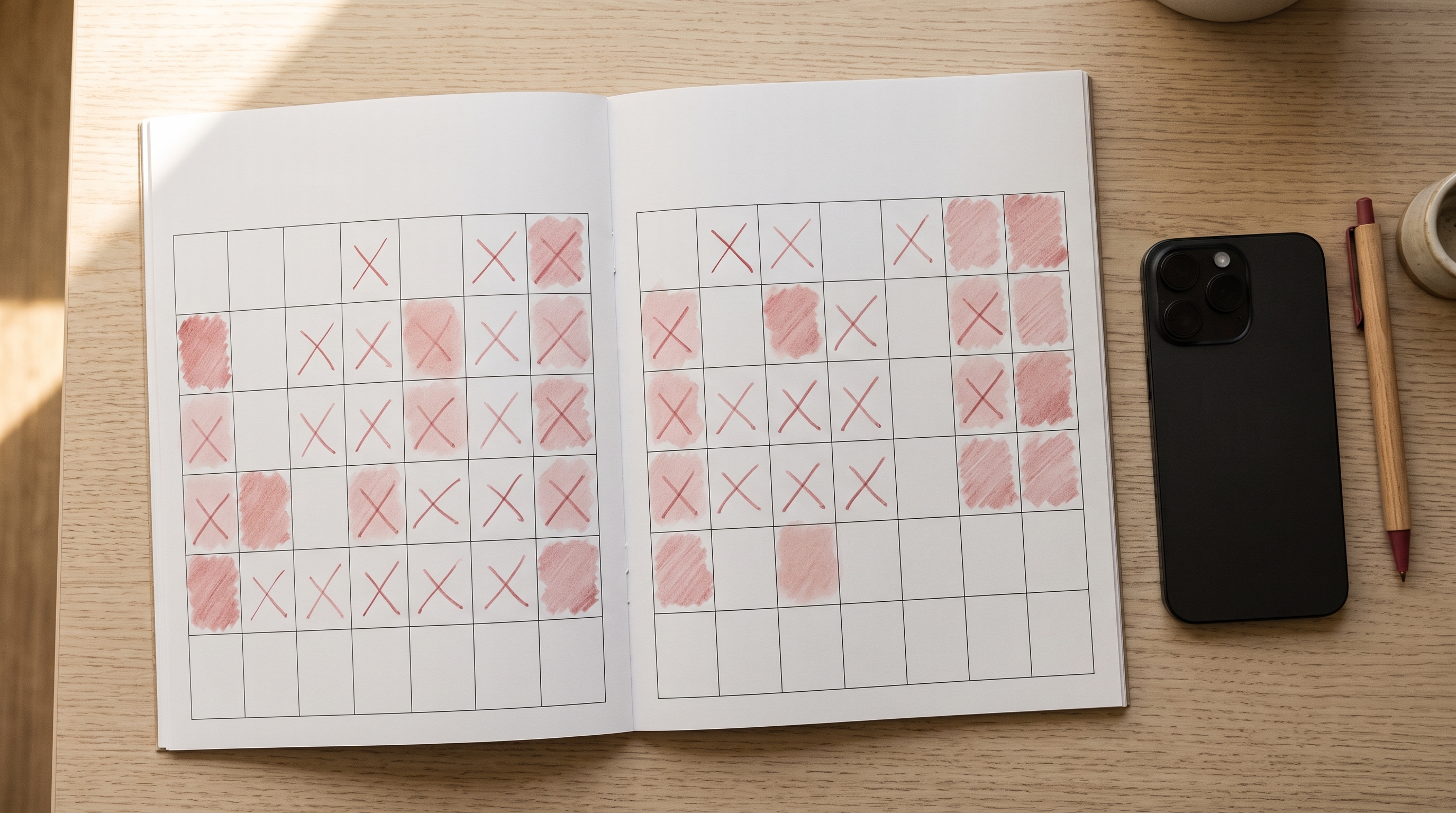
The four-week timeline the research confirms is only achievable if the boundary holds consistently. A single missed night does not derail everything — but a boundary that collapses three nights a week never accumulates the benefits the studies measure. Consistency is the mechanism and a scheduled blocker is how you get it without relying on discipline that depletes by end of day.
Protect Your Sleep Starting Tonight
Detach is free. Schedule your bedtime block in under 5 minutes. No account required. The 4-week research timeline starts the first night you use it.
Get Detach Free → getdetach.appFrequently Asked Questions
How long before bed should I stop using my phone?
The American Academy of Sleep Medicine recommends avoiding blue light from handheld electronics 30 to 60 minutes before bedtime. The clinical trial published in PLOS ONE used a 30-minute restriction and achieved measurable improvements in sleep, mood and working memory within four weeks. For heavy users with two or more hours of evening screen time, a two-hour buffer produces stronger results. Start with 30 minutes if the full hour feels unrealistic and extend it as the habit builds.
Does using your phone before bed actually cause insomnia?
Research confirms it significantly increases insomnia risk. One large study of over 45,000 young adults found that each additional hour of evening screen time increased insomnia risk by 59% and reduced sleep duration by an average of 24 minutes per night. The mechanism is both biological — blue light suppresses melatonin — and cognitive — stimulating content keeps the brain in an alert state when it should be winding down. Both effects compound with regular pre-sleep phone use.
What should I do instead of using my phone before bed?
The most effective replacements are activities that produce mental calm without screen stimulation. Reading a physical book is the most widely recommended — it engages the mind at a low arousal level that supports the natural wind-down process. Light stretching, journaling, conversation or a warm shower are all consistently associated with earlier sleep onset and better sleep quality. The key is having the replacement activity ready before the phone habit would normally begin rather than deciding in the moment.
How quickly will I notice improvements after stopping phone use before bed?
Most people notice they fall asleep faster within the first week. Sleep duration typically increases by week two. Mood improvements become noticeable by week three. Cognitive improvements in focus and working memory are measurable by week four based on the peer-reviewed randomized trial. The timeline is consistent across multiple studies and the changes are not subtle — participants in controlled trials reported and measured significant differences in all four areas within a single month.
Is night mode or blue light filter good enough to protect sleep?
Blue light filters reduce one part of the problem but do not address the cognitive stimulation that the content itself creates. Cleveland Clinic sleep expert Dr. Michelle Drerup notes that the content you consume before bed likely has more impact on sleep than the blue light from the screen itself. Scrolling social media or reading emotionally activating news keeps your brain in an alert state regardless of screen color temperature. Night mode helps at the margins. Stopping phone use before bed addresses both the biological and cognitive mechanisms simultaneously.
Can an app blocker actually help me stop using my phone before bed?
Yes — specifically one with a scheduling feature and a commitment mechanism. The research consistently shows that people who know phone use before bed is harmful still do it regularly because the decision to stop has to be made repeatedly at the end of every day when self-control is depleted. A scheduled blocker like Detach makes the decision once. The apps are blocked before the temptation arises. The bedtime boundary holds automatically without requiring a nightly act of willpower at exactly the moment you have the least of it.